


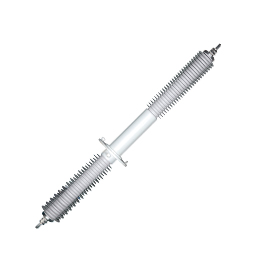
Wall Piercing Voltage Bushing
Wall bushings are essentially a special type of insulating device, mainly composed of insulating components (such as porcelain), metal accessories, mounting flanges, and conductive parts...
Product Profile
Wall bushings are essentially a special type of insulating device, mainly composed of insulating components (such as porcelain), metal accessories, mounting flanges, and conductive parts (conductive rods or busbar clamps). Depending on the insulation structure and external insulation materials, they can be mainly divided into the following categories:
Product Applications
Wall bushings are key components in distribution equipment like power plants and substations. Their main application scenarios include:
1.High-voltage conductors passing through walls: This is their core application, used to support conductors passing through substation walls or floors.
2.Equipment enclosure connections: Used for conductors passing through the metal enclosures of high-voltage equipment like transformers, circuit breakers, and capacitors.
3.Bus connections and transitions: Serve as insulation and support when busbars pass through walls or partitions.
Product Features
1.Excellent insulation performance: Effectively isolates high-voltage conductors from grounded parts, preventing current leakage.
2.High mechanical strength: Can withstand the weight of the conductors and certain mechanical tension.
3.Strong environmental adaptability: Designed for indoor or outdoor use, with some products offering good anti-pollution and explosion-proof performance.
4.Flexible conductor options: Copper or aluminum conductors can be used as needed. When directly connecting copper and aluminum, which can easily cause galvanic corrosion, using aluminum conductor porcelain bushings is an effective solution.
Selection Points
1.Voltage and current: Choose a bushing that matches the system's rated voltage and current.
2.Installation environment: Clarify whether it is for indoor or outdoor use. Outdoor types need to consider their pollution resistance level (e.g., levels I, II, III, IV).
3.Conductor type: Choose rod-type or busbar-type bushings depending on the wires or busbars to be connected.
Installation Key Points
1.Hole reservation: Wall hole size should accommodate the maximum size of the bushing flange to avoid damage during forced installation. The installation hole diameter should generally be more than 5mm larger than the embedded part.
2.Prevent closed magnetic circuits: For bushings rated 1500A or above, when directly fixed on steel plates, ensure no closed magnetic circuits form around the bushing to prevent overheating.
3.Installation direction: For vertical installation, the flange should be at the top; for horizontal installation, the flange should be on the outside.
4.Clean environment: Installation should be in a clean and dry environment, avoiding rain, snow, strong wind, or high dust concentration.
Operation and Maintenance
1.Appearance inspection: Before installation and during operation, check that the porcelain surface has no cracks, glazing defects, or bubbles.
2.Partial discharge: If partial discharge occurs during operation, check if the aluminum spray layer at the flange or inner cavity has fallen off.
3.Temperature monitoring: When the ambient temperature exceeds 40℃, consider derating usage. Typically, for every 1℃ increase, rated current load decreases by 1.8%.
Application Environment
1.Temperature: Suitable standard environment is -40℃ to 40℃.
2.Altitude: Standard usage altitude does not exceed 1000 meters.
3.Humidity: Indoor-type relative humidity monthly average is usually not more than 90%.
4.Outdoor environment: Can withstand wind speed not exceeding 34m/s.
Main Standards Followed
GB/T 12944: "High-Voltage Wall Porcelain Bushing"
DL/T 1001: "Technical Conditions for Composite Insulation High-Voltage Wall Bushings"