SF6 Circuit Breaker Porcelain Bushings
SF6 circuit breaker bushings are key insulating components in high-voltage power transmission and transformation equipment, mainly providing insulation support for outdoor high-voltage SF6 circuit breakers and GIS (Gas-Insulated Switchgear)...
Product Profile
Product Overview
SF6 circuit breaker bushings are key insulating components in high-voltage power transmission and transformation equipment, mainly providing insulation support for outdoor high-voltage SF6 circuit breakers and GIS (Gas-Insulated Switchgear), or serving as an insulation container. Their main function is to ensure the electrical insulation performance and mechanical stability of the equipment.
Product Use
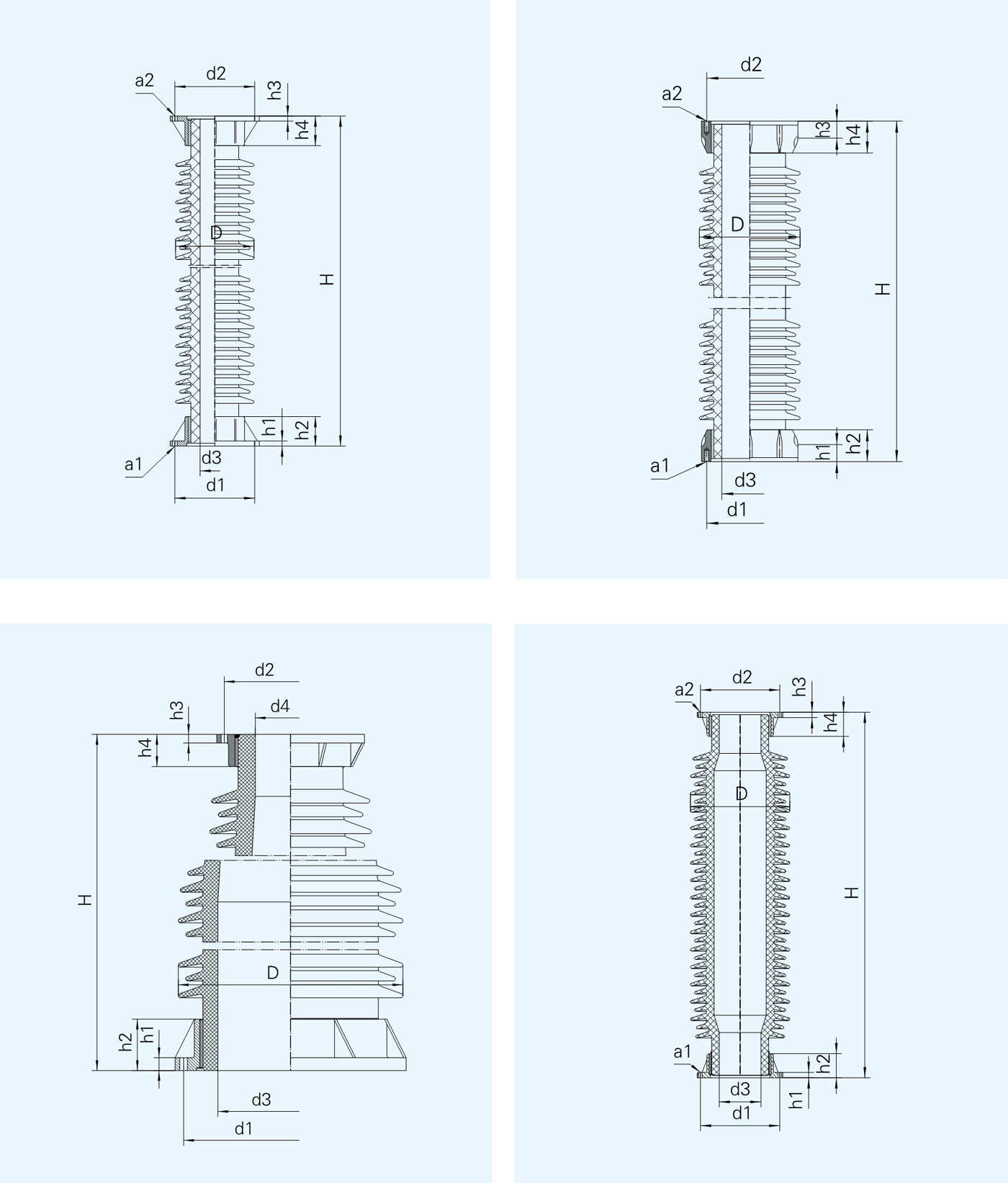
SF6 circuit breaker bushings are used in outdoor high-voltage SF6 circuit breakers. Based on their usage, they can be divided into post-type SF6 circuit breaker bushings and tank-type SF6 circuit breaker bushings. Post-type bushings can further be categorized into three types depending on the application: post bushings, arc-extinguishing bushings, and resistor bushings. Post bushings serve as insulation pillars for post-type SF6 circuit breakers, arc-extinguishing bushings provide insulation capacitance for the arc chamber of post-type SF6 circuit breakers, and resistor bushings act as insulation containers for the closing resistors of post-type SF6 circuit breakers.
Structure and Performance Guarantee
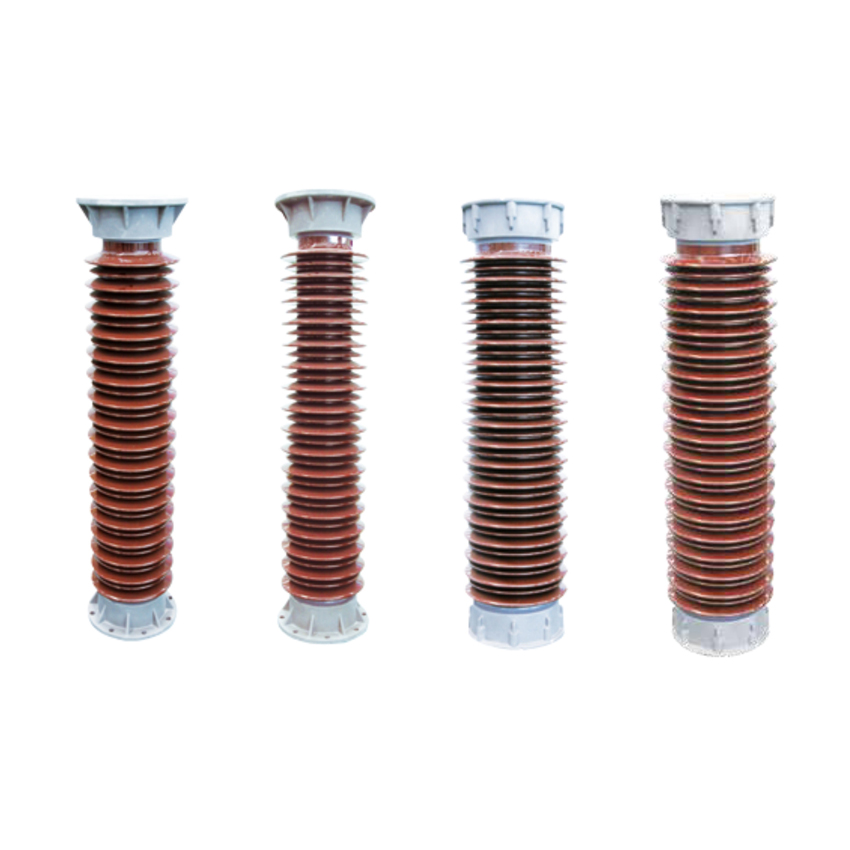
The inner and outer surfaces of the porcelain parts are coated with brown glaze, and the umbrella shape of the bushing is an open alternating umbrella pattern. The porcelain parts are made of high-strength porcelain with a high aluminum oxide content, offering excellent mechanical strength and thermal stability, ensuring superior internal water pressure resistance, bending strength, and long-term operational reliability. To ensure airtightness, the end faces of the porcelain parts are precisely ground, achieving a roughness of Ra1.6 and parallelism of 0.15. For gas-pressure bushings, a layer of waterproof silicone is applied to the flange to prevent water and moisture from entering the flange or cement adhesive, avoiding additional thermal stress caused by water or moisture freezing in cold regions. The flange material can be high-strength cast aluminum alloy depending on product requirements. Before leaving the factory, besides checking dimensions, geometric tolerances, and creepage distance, each bushing undergoes ultrasonic flaw detection, routine hydrostatic testing, and four-way bending inspection. The mechanical breaking strength and porcelain quality are also randomly tested per kiln batch.
Technical Parameters
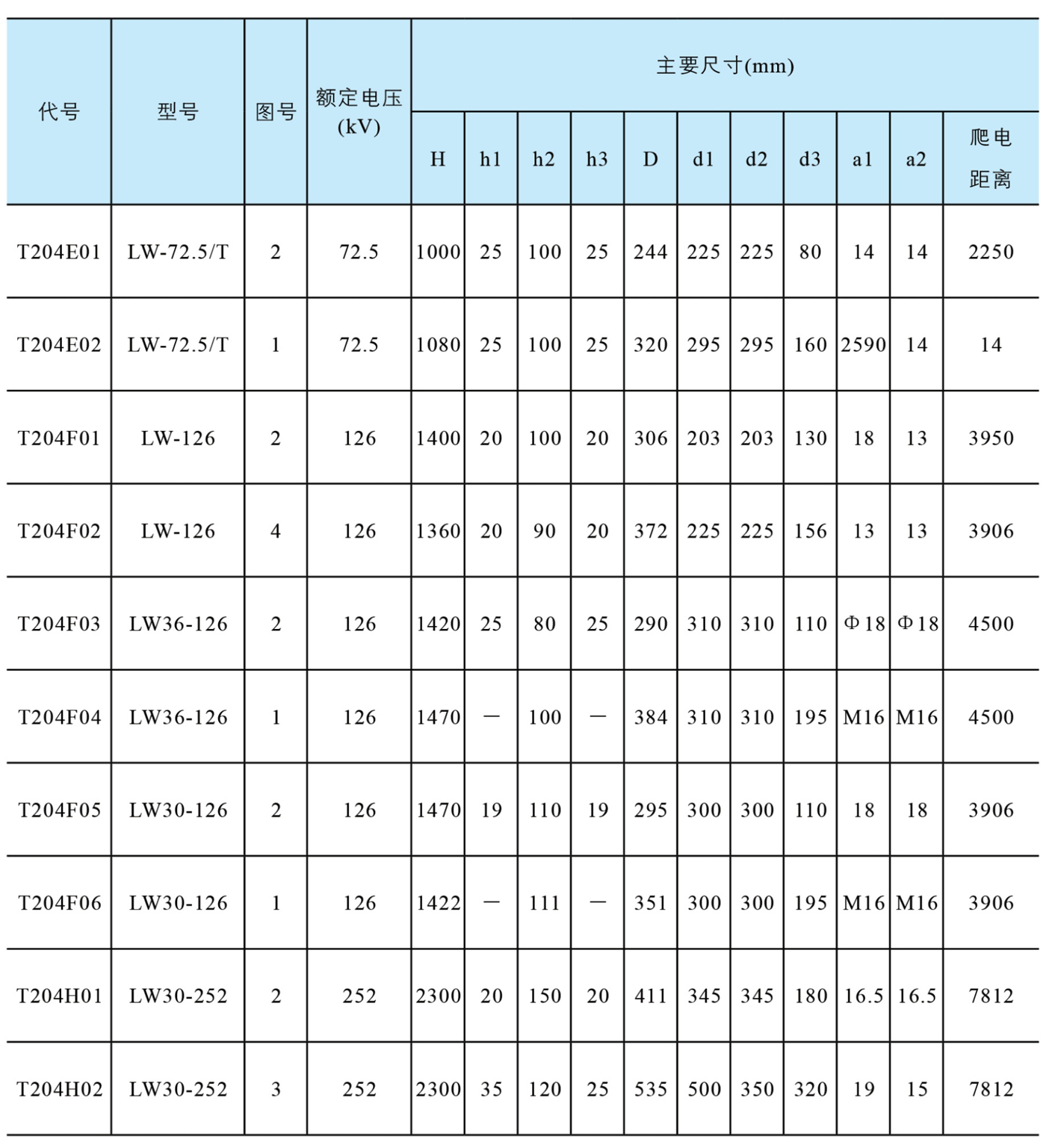
Dimensions