








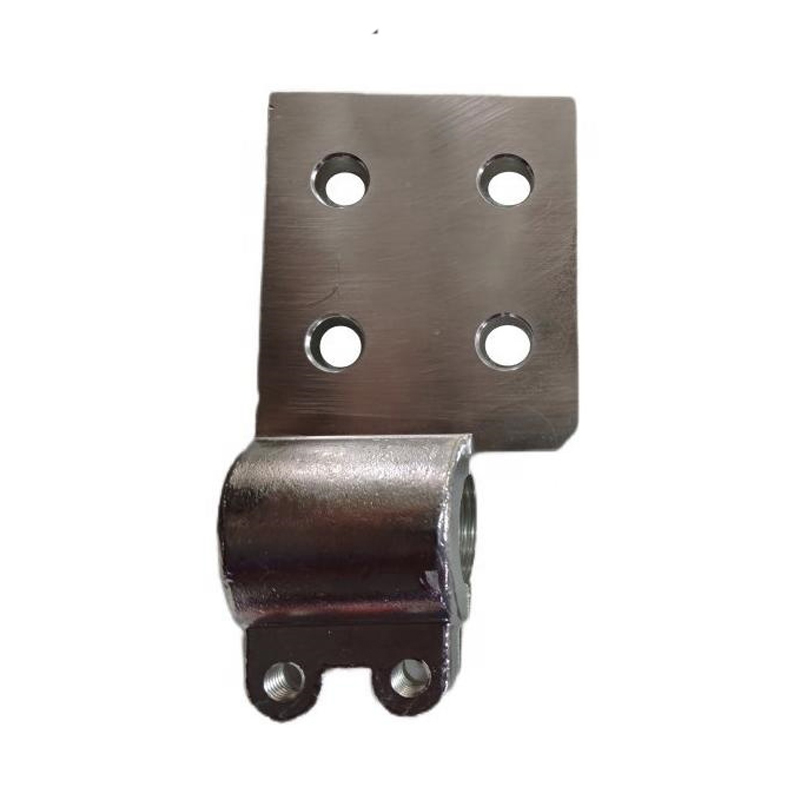
Special Terminal For Transformer
Transformer-specific terminals are conductive components installed on transformers for connecting external wires. Their main role is to provide a low-resistance, highly stable transmission path for current, ensuring efficient power output while keeping the connection points safe...
Product Profile
Product Overview
Transformer-specific terminals are conductive components installed on transformers for connecting external wires. Their main role is to provide a low-resistance, highly stable transmission path for current, ensuring efficient power output while keeping the connection points safe.
Categories and Types
Transformer-specific terminals come in a wide variety and can be categorized from the following perspectives
By connection method
Bolt/Screw type: Tighten wires with bolts and washers, providing a solid and reliable connection, suitable for high-current scenarios.
Spring type: Clamps the wire with a spring, making installation easy and suitable for quick wiring.
Crimp type: Uses special tools to crimp the terminal and wire together, creating a permanent connection with low resistance, saving space.
Plug-in type: Connects via plug and socket, allowing quick disconnection and maintenance of equipment.
By conductor material
Copper terminals: Excellent electrical conductivity.
Aluminum terminals: Lower cost and lighter weight.
Copper-aluminum transition terminals: Specially designed to connect copper and aluminum wires, effectively preventing galvanic corrosion.
By installation method and structure
Rail-mounted: Installed on standard DIN rails, convenient for centralized arrangement in control cabinets.
Plate-type/Fence-type: Terminals arranged on an insulating board, with a clear structure.
Through-wall type: Used for allowing wires to pass through equipment housing or partitions.
By voltage level
Low-voltage terminals: For systems of 1kV and below.
High-voltage terminals: For systems of 10kV and above.
Key Standards
GB/T 5273-2016: ‘Standardization of High-voltage Electrical Terminal Sizes.’ This is China’s core standard for high-voltage electrical terminals (including transformers), specifying terminal types, dimensions, and technical requirements.
IEEE C57.12.70: ‘Standard Terminal Marking and Connections for Distribution and Power Transformers.’ This is the international authoritative standard for transformer terminal identification and connections.
Selection and Considerations
Clarify electrical parameters: First, confirm the rated voltage and current of the system.
Match wire specifications: Ensure the terminal’s wire connection range matches the cable cross-section.
Consider conductor material: Choose terminals according to whether the wire core is copper or aluminum.
Check installation dimensions: Confirm that terminal shape and mounting hole spacing match the transformer’s reserved positions.
Assess the usage environment: In humid or corrosive environments, choose tin-plated or silver-plated terminals.
Installation and Usage Tips
Clean connections: Before installation, thoroughly clean wire connection points and remove oxide layers.
Crimp correctly: Use special crimp tools to ensure a tight and secure connection.
Insulate: After installation, wrap exposed parts with insulation covers or tape to prevent short circuits and electric shock.
Use proper torque: For bolt connections, tighten with a torque wrench according to recommended values to avoid being too loose or too tight.
No live work: All installation and maintenance must be done after powering off the equipment.
Operation and Maintenance Recommendations
Regular inspection: Check terminals for looseness, overheating, or corrosion.
Temperature monitoring: Use an infrared thermometer to check operating temperature, as unusual temperature rises often indicate a fault.
Keep clean: Remove surface dust to prevent tracking or short circuits.
Replace promptly: Immediately replace aged or damaged components.
Application Environment
Transformer terminals are widely used, covering power generation, transmission, and distribution stages. Whether it’s large power transformers, small distribution transformers, or equipment like box-type substations and switchgear, terminals are essential. Especially in emerging fields like new energy (solar, wind), rail transit, and industrial automation, terminal performance requirements are higher.